Content Over #Codes

MULTI-FAMILY

Debunking the Hashtag Myth in Multifamily Marketing

VIEW MORE STORIES

In March 2026, GTMA’s digital team conducted a portfolio-wide experiment across multiple asset classes (Class A Luxury to Workforce Housing) to determine the actual impact of hashtag density on Instagram reach and engagement. While conventional real estate marketing often relies on “hashtag stuffing” to drive visibility, our findings—supported by direct insights from Instagram leadership—confirmed a critical shift: Content quality and categorization now outweigh tag volume in driving resident engagement.
At A Glance

Project Overview
Client / Partner 10+ Multifamily Communities
(Class A Luxury to Workforce Housing)
Market National Portfolio (including Austin,
Charlotte, Dallas, and Ocoee)
Services Organic Social Strategy, Content Development,
Performance Analysis
Tech Engine EvernodeAI Piloted by GTMA
GTMA Focus Social Discovery & Engagement Optimization
Core Outcome Proving that visual storytelling drives reach, not hashtag volume

The Challenge:

"The Visibility Illusion"


For years, the multifamily industry has operated under the assumption that 20–30 hashtags are a prerequisite for discovery. Clients frequently prioritize these "metadata" tactics over the creative narrative. GTMA needed to prove whether this effort was driving "Hearts and Homes" or simply creating digital noise. The goal was to move our partners from "Manager Mode" (checking boxes) into "Marketer Mode" (telling stories).

The Strategy:

A Data-Driven Side-by-Side


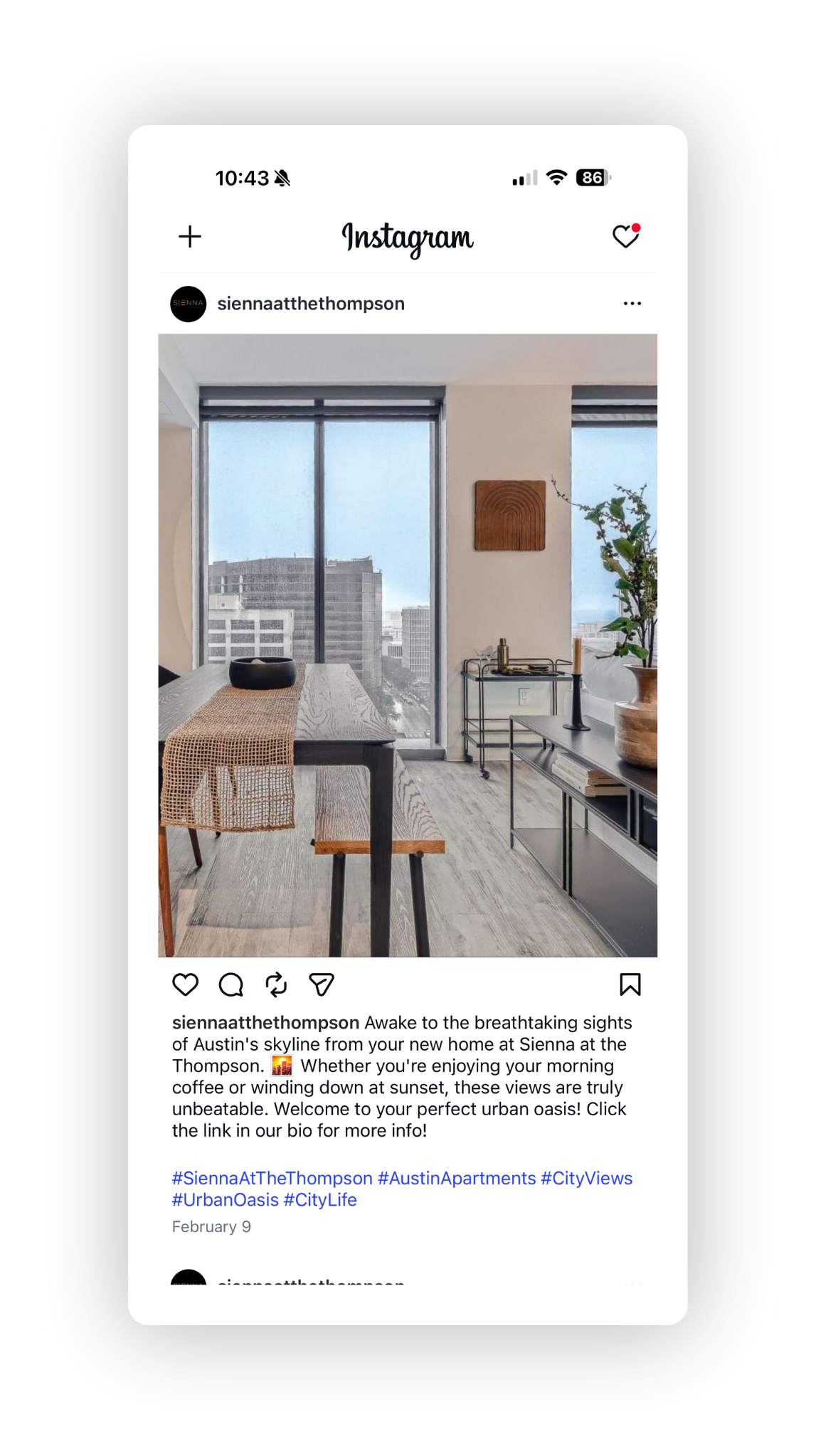
Leveraging EvernodeAI to track real-time performance, we executed a split-test strategy across 10+ properties, including Gold-tier communities like Alibi at Lake Lilly and Silver-tier properties like Sienna at the Thompson.

Variable A
(High Density):

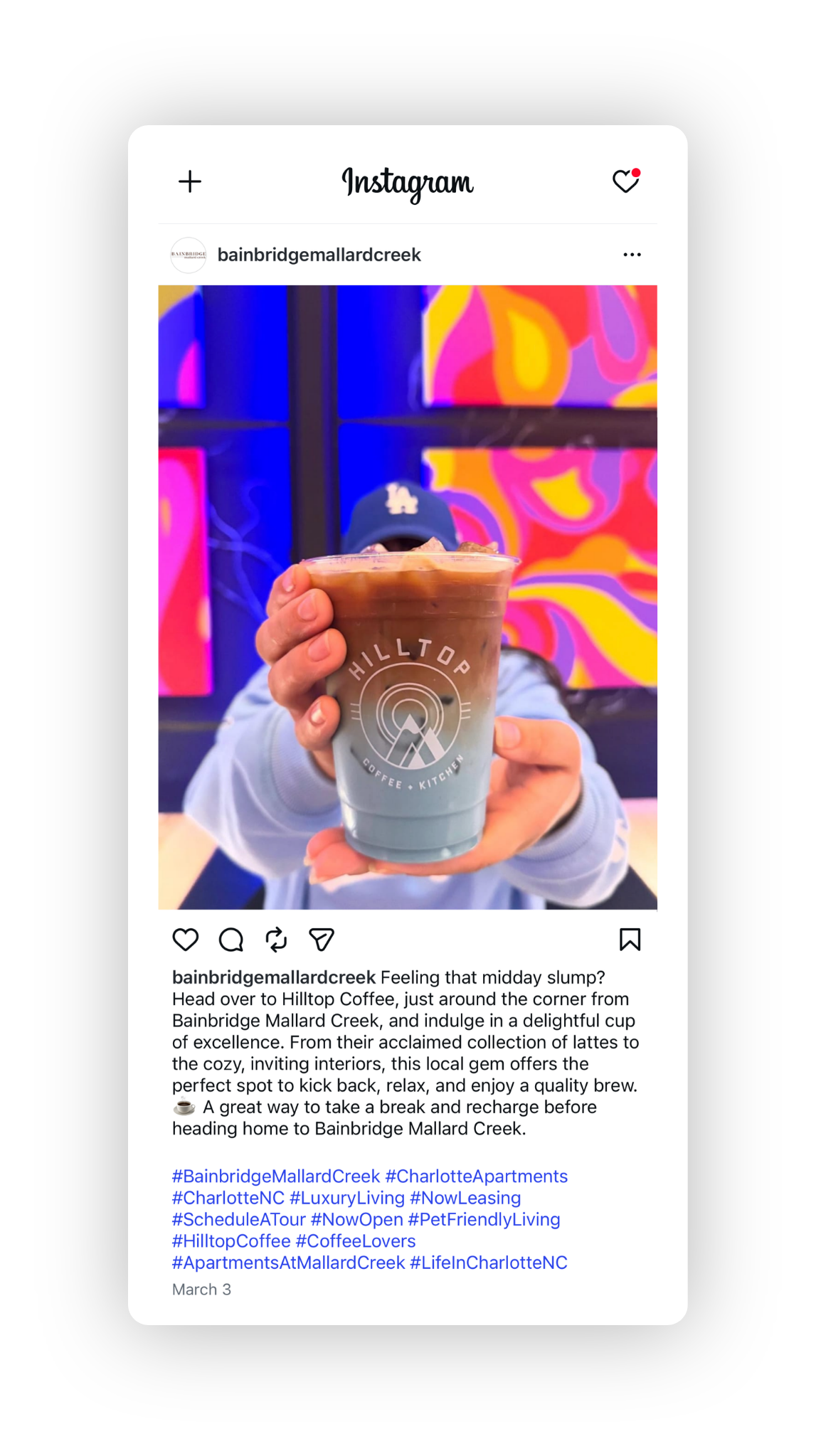
Posts utilizing 10–20 broad and hyperlocal hashtags.

Social media mockup of a Facebook social post with a hashtag-heavy caption.

Variable B
(Minimalist):

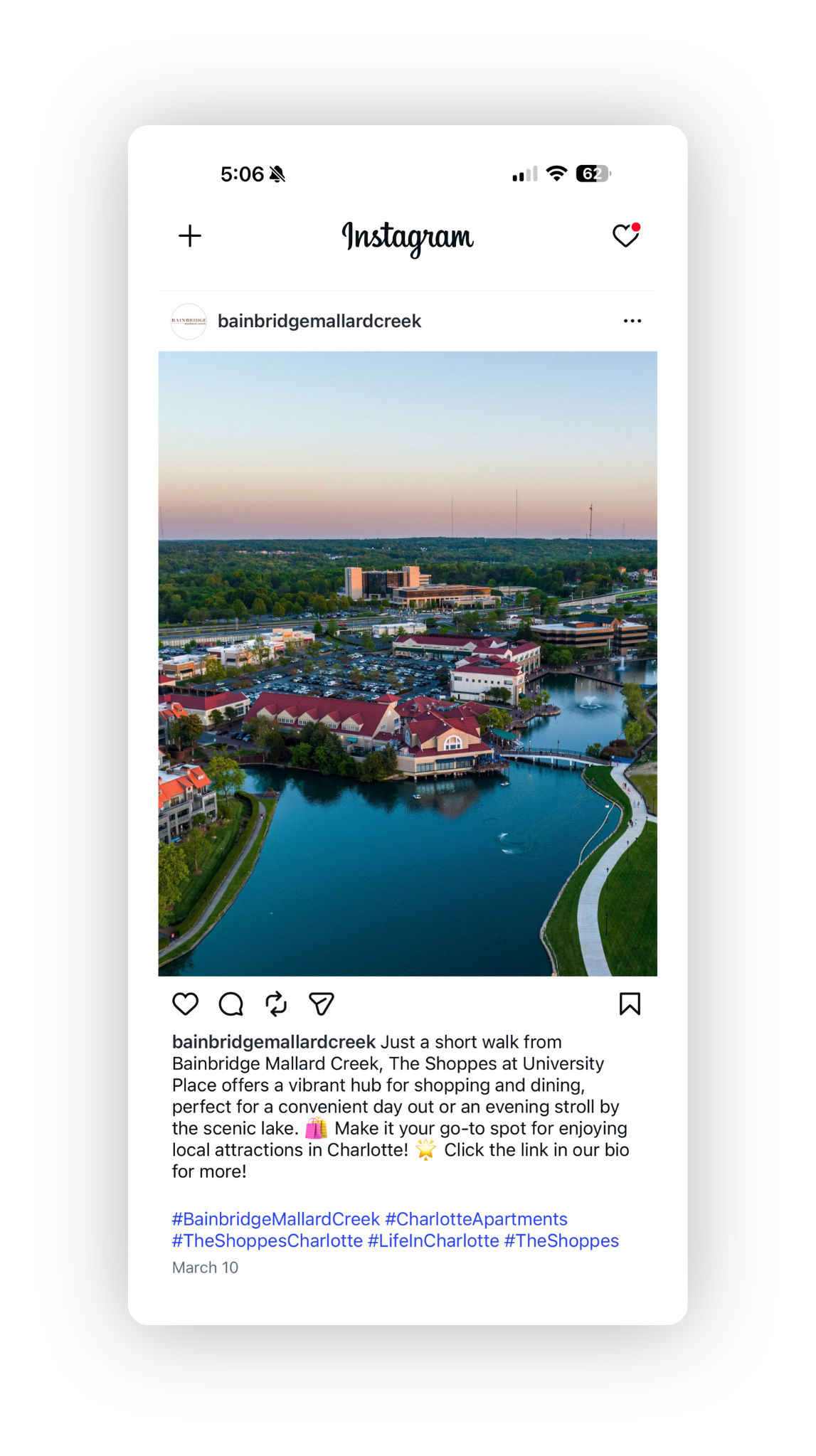
Posts utilizing 3–5 highly specific, categorical hashtags.

Social media mockup of a Facebook social post with fewer hashtags.

The Benchmark

We tracked Views, Reach, and Interactions over a 30-day period to see if "Variable A" could consistently outperform "Variable B."


Instagram Metrics Explained:

Views

The number of times your content was played or displayed. Learn More

Instagram Post Reach

This metric counts reach from the organic or paid distribution of your post, including if it was boosted. Reach is only counted once if it occurs from both organic and paid distribution. This metric does not include reach from when your post was reshared.This metric is estimated. Learn More

Post Interactions

The number of post likes or reactions, saves, comments and shares minus the number of deleted or removed interactions.

Instagram Follows

The number of times people clicked on the follow button from your content, including from ads if your content was boosted. This metric may also include the number of follows you received directly on your Instagram profile.

The Results:

Data vs. Myth


The experiment yielded a definitive, albeit counter-intuitive, result that has since reshaped our social strategy:

Instagram post featuring The Alibi at Lake Lilly's scenic exterior, and using a caption with more hashtags.

The Reach Ceiling

In most cases, such as Merano and Bainbridge Mallard Creek, reach remained stagnant regardless of hashtag count. Reach was driven by the visual hook (e.g., a cinemagraph or high-end kitchen rendering) rather than the tags. 

The "Mosseri Factor"

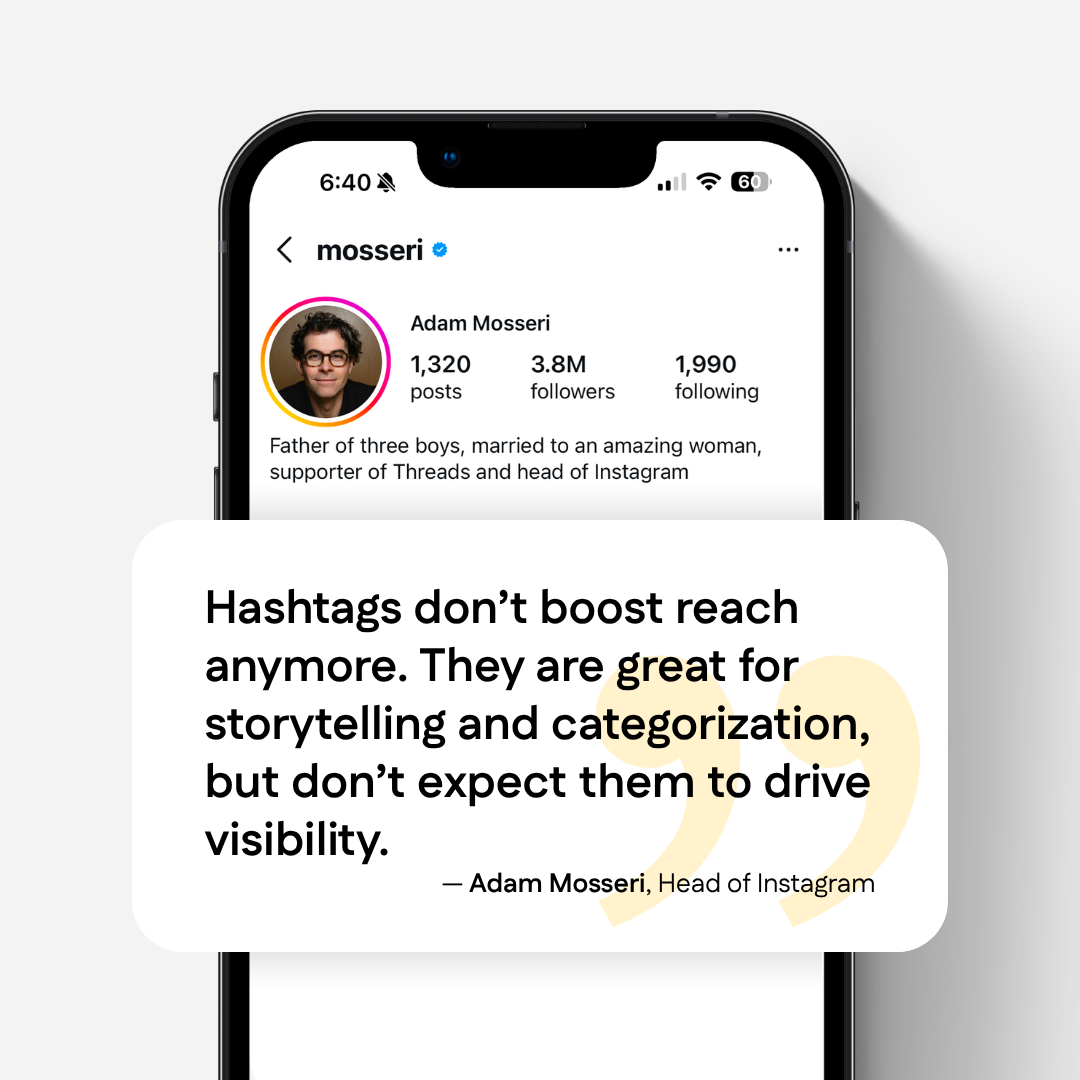
During the experiment, Instagram CEO Adam Mosseri confirmed that hashtags are for categorization, not reach enhancement. 

"Hashtags don't boost reach anymore. They are great for storytelling and categorization, but don't expect them to drive visibility." - Adam Mosseri, Head of Instagram. Mockup graphic of iPhone viewing the profile of Adam Mosseri, @mosseri.

Quality Over Quantity

Properties like Alexan by the Galleria and Sienna at the Thompson saw higher engagement when tags were used to categorize specific amenities or perks (e.g., #A3FloorPlan, #SiennaStar) rather than broad terms (#ApartmentLiving). 

Social media mockup of an Instagram social post with more hashtags that did not receive as high of engagement metrics. Illustrating the "quantity" side versus quality.

4x More Engagement
More Hashtags | Less Reach

Social media mockup of an Instagram social post with fewer hashtags that received higher engagement metrics. Illustrating the "quality" side versus quantity.

51% Increase in Reach
Less Hashtags | More Categorization

The Discovery Shift

Data showed that users are 55% more likely to interact with Reels and Lifestyle+ Video content with zero hashtags than a static image with 30 hashtags. 

Metric Type The Outcome Strategic Impact
Discovery Efficiency 14% Increase Higher engagement with less metadata clutter.
Leasing Intent 12% Higher Link Clicks Better content drives higher-quality prospect traffic.
Reach Variance <3% Difference Reach is driven by visual hooks, not hashtag volume.
The "Mosseri" Shift 55% Higher Interaction Categorization > Reach Chasing.

Why This Matters for Multifamily Marketers


This experiment allows GTMA to provide a more efficient, high-touch service. By stopping the "hashtag chase," we enable our strategists to focus on what actually fills units:

Cinematic storytelling and
visual excellence.

Instagram Hashtag Categorization visual example of filing versus reach growth.

Key Takeaway

In 2026, hashtags are a filing system, not a megaphone. To turn heads and win hearts, the focus must remain on the story.

Hashtags primarily help organize content and
improve searchability—not visibility.  
Content is the only true engine of reach. 

 — GTMA + EvernodeAI Digital Strategy Team

Want a smarter social workflow?

See how GTMA builds scalable multifamily marketing systems that improve reach, simplify execution, and keep content locally relevant.

INTERESTED IN CHATTING?

I'D RATHER RUN A MARATHON. YES