Student Housing Marketing: How to Turn Search Into Signed Leases
Kevin Phillips
August 17, 2026
Direct Answer: What is the Best Way to Market Student Housing?
The best way to market student housing is to answer the real questions students and parents ask before they ever schedule a tour: Is it close to campus? Can I lease by the bed? What floor plans are available? Can I bring roommates? Is it safe, accessible, furnished, pet-friendly, and within budget? A strong strategy brings those answers together through SEO, web design, paid media, social media, virtual tours, photography, video, reputation marketing, and analytics.
For GTMA, student housing marketing is not just apartment marketing with a campus name added to the copy. GTMA’s student living work is built around by-bed leasing, school-year calendars, mobile-friendly websites, interactive floor plan tools, virtual tours, online galleries, parent-and-student messaging, paid ad placements, and transparent reporting. The sector is large enough to warrant a dedicated approach: NMHC’s student housing resources include a 2025 benchmarking survey with data from 16 providers, 719 properties, 144,149 units, and 400,224 beds across 44 states and six regions.
What Makes Student Housing Different From Standard Multifamily?
Student housing has a different rhythm. Conventional multifamily marketing often follows rolling availability, monthly move-ins, and a wider resident profile. Student housing follows the academic calendar, lease-up urgency, roommate decisions, campus proximity, guarantor questions, and seasonality tied to tours, applications, renewals, and move-in deadlines.
That means your marketing cannot only say “now leasing.” It has to answer “now leasing for when?” A student searching in October may be planning for next fall. A parent searching in February may be comparing safety, distance, total cost, and lease terms. A group of roommates searching in April may need a specific bed count, individual leases, and availability before another community fills up.
GTMA’s student housing sector page notes that student living campaigns may need to be tailored by bed rather than only by unit or suite, adjusted around school-year timing, and customized around each property’s building, location, campus, amenities, and student community. That is exactly why media strategy, SEO services, web design, and analytics support need to work as one system rather than separate tasks.
How Should a Student Housing Website Answer Renter Questions?
A student housing website should act like the most prepared leasing consultant on your team. It should answer the first question quickly, guide the next click naturally, and make the next step obvious. For conversational search optimization, each core page should be built around plain-language questions that match how students and parents search.
Start with the basics:
- Location
- Proximity to campus
- Floor plans
- Pricing structure
- Availability
- Lease timing
- Roommate policies
- Parking
- Furnishings
- Pet policies
- Amenities
- Internet
- Transportation
- Tour options
Then add context that supports decisions: campus lifestyle, neighborhood highlights, photo galleries, virtual tours, resident review themes, and parent-focused information.
- Campus lifestyle
- Neighborhood highlights
- Photo galleries
- Virtual tours
- Resident review themes
- Parent-focused information
GTMA’s web design service page describes the website as the foundation and central hub of a digital marketing strategy, and its multifamily work includes interactive floor plan browsers, virtual tours, online galleries, and other tools that help residents navigate the apartment search. A related GTMA article on real estate UX reinforces the importance of making real estate websites practical and easy to use. For accessibility, W3C’s WCAG guidance explains that WCAG helps make web content more accessible to people with disabilities.
What Should Student Housing SEO Focus On First?
Student housing SEO should focus on local intent, campus intent, and decision-stage questions. A student may search “student housing near [university],” while a parent may search “best off-campus housing near [university]” or “student apartments with parking.” A future resident may also ask longer conversational questions such as “What is included in student housing rent?” or “Can I lease one bedroom in a four-bedroom apartment?”
Your SEO plan should support all three layers: the property website, the Google Business Profile, and content that answers real questions. Google’s local ranking guidance says complete and accurate Business Profile information helps local search visibility, and it specifically points to updates, verification, hours, review responses, and photos or videos. Google’s people-first content guidance also emphasizes helpful, reliable information made for people rather than content created only to manipulate rankings.
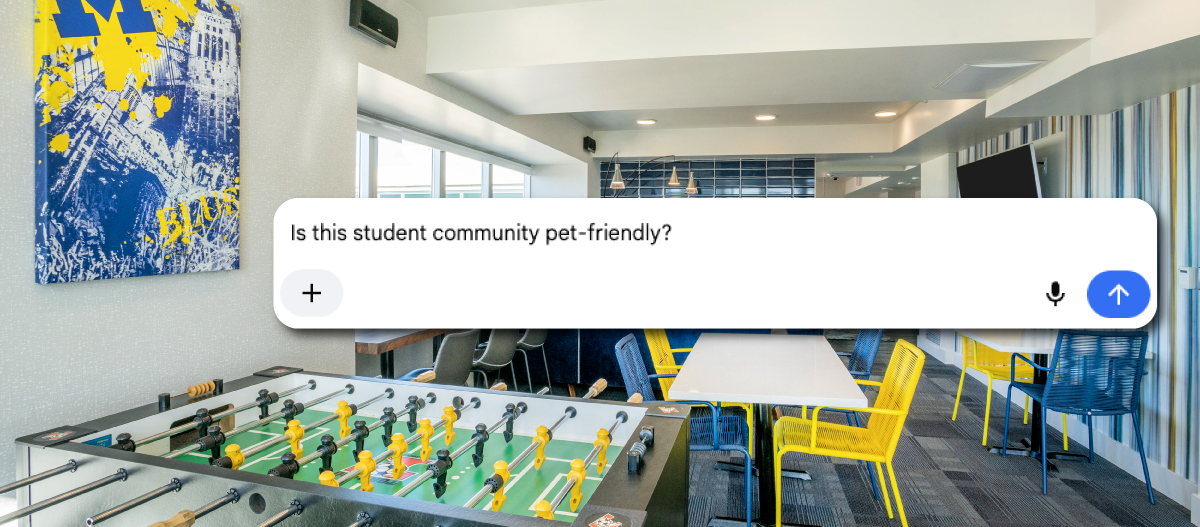
That is where CSO and SEO overlap. A page that answers “How far is this apartment from campus?” should include the direct answer, supporting details, transit or walkability context, and a clear tour path. A page that answers “Do student apartments allow individual leases?” should define the policy, explain what renters need to know, and connect users to the right floor plan or leasing form. GTMA’s local SEO and reputation SEO resources can support this kind of search-led structure.
How Should Paid Media Support Student Housing Pre-Leasing?
Paid media should match the leasing calendar. Early in the cycle, campaigns may focus on awareness, brand recall, and interest from students comparing options. As deadlines approach, campaigns should shift toward floor plan availability, tour scheduling, roommate-friendly messaging, and high-intent search terms. After a prospect visits the website, retargeting can bring them back with relevant creative, not generic reminders.
GTMA’s media strategy service includes keyword-driven paid search, search ad campaigns aligned to goals and funnel stage, conversion optimization, A/B testing, performance tracking, and geotargeting. That combination matters in student housing because wasted spend is especially costly when the leasing window is compressed. A campaign should know the difference between a student casually browsing next year’s housing and a parent ready to book a tour this weekend.
Housing ads also need careful review. Messaging and targeting should respect fair housing requirements and platform policies. HUD’s Fair Housing overview states that the Fair Housing Act protects people from discrimination in renting, buying, mortgage activity, housing assistance, and other housing-related activities, and it identifies protected categories including race, color, national origin, religion, sex, familial status, and disability.
What Creative Content Helps Students and Parents Say Yes?
Student housing creative needs to make the community feel real before the tour. Students want to picture daily life. Parents want clarity and confidence. The creative system should include professional photography, short-form video, amenity content, floor plan visuals, lifestyle content, campus-area context, resident-focused messaging, and brand consistency across every channel.
GTMA’s student living page states that its creative work uses hyper-local research and in-market analysis to build brand identities and visual stories around community amenities, location, and campus lifestyle. Its approach also recognizes a dual audience: students and parents. That dual-audience reality should shape everything from a social media caption to a landing page hero section.
For example, a student-facing video might show study lounges, fitness areas, roommate moments, walkable food spots, and weekend lifestyle. A parent-facing page might clarify lease structure, management communication, online payments, location, accessibility, and the tour process. Both can use the same brand, but each should answer a different emotional question.
This is where virtual tours, organic social, photography, motion graphics, and video production support the leasing funnel. GTMA’s virtual tour service describes 3D tours and 360-degree experiences as embeddable and mobile-optimized, which is especially useful for out-of-market students and parents who cannot visit every property in person.
How Does Social Media Fit Into Student Housing Marketing?
Social media should not be treated as a separate brand activity. It should be a conversation layer that supports leasing, retention, resident experience, and reputation. Student housing communities can use social media to answer common questions, show real spaces, promote tour opportunities, remind prospects about deadlines, introduce team members, highlight campus-area moments, and build confidence around move-in.
The strongest student housing social content usually feels specific. Instead of posting “schedule a tour” every week, rotate content around real questions: “What comes furnished?” “How does roommate matching work?” “What is the parking process?” “How close are we to campus?” “What should parents know before signing?” This format works well for CSO because the same questions can become social captions, FAQ content, short videos, website sections, and paid ad copy.
GTMA’s organic social media service focuses on strategic storytelling, hyper-local content, social profile maintenance, engagement, and data-driven optimizations. For student housing, that means social media should not only look good. It should reduce friction, improve trust, and move prospects toward the next action.
What Role Do Reviews and Reputation Play?
Reputation can make or break student housing lead generation. When several communities offer similar proximity, amenities, and price points, reviews often become the tie-breaker. Students read them for lifestyle clues. Parents read them for management trust, maintenance responsiveness, safety concerns, and communication quality.
That means reputation marketing should be connected to SEO, not isolated as customer service cleanup. GTMA’s SEO and reputation marketing page explains that initial SEO efforts help optimize a website and business listings across the web, while reputation management captures reviews across major platforms. It also notes that reputation management can aid search rankings and create a connection point between on-site teams and online information.
A practical student housing reputation plan should monitor recurring themes, identify operational issues that affect marketing claims, respond professionally, and use review insights to improve content. When prospects keep asking about parking, make parking easier to find. When reviews praise staff communication, turn that into brand proof. When reviews mention maintenance concerns, align response strategy with the property team so marketing does not promise what operations cannot support.
How Should Student Housing Performance Be Measured?
Student housing marketing should be measured by the actions that actually support leasing. Impressions and clicks are useful, but they are not enough. A better measurement plan connects ad spend, traffic quality, lead source, tour requests, floor plan interest, call tracking, form completions, chat activity, email performance, and lease outcomes.
GTMA’s analytics service measures common digital platform KPIs like CPC, impressions, reach, CTR, and landing page views, while also looking at quality indicators such as time on site, page visits per session, goal completions, traffic source, and real-time dashboard reporting. That matters because one channel may generate many clicks, while another generates fewer but better leads.
For student housing, measurement should also reflect seasonality. What worked during awareness may not work during final bed availability. What worked for renewals may not work for new prospects. What worked for one university market may not translate to another. The dashboard should help your team ask better questions every week: Which floor plans need support? Which audiences are converting? Which creative is driving tours? Which source is producing leases?
What Does a Complete Student Housing Marketing System Include?
A complete student housing marketing system includes the channels, creative, tracking, and content needed to guide a prospect from first search to signed lease. It usually includes:
- A fast, mobile-friendly website with floor plans, pricing logic, tour paths, photos, FAQs, and accessibility standards
- Local SEO, Google Business Profile management, reputation monitoring, and question-based content
- Paid search, display, social ads, retargeting, and budget planning tied to the academic calendar
- Brand development, graphic design, photography, video, motion graphics, and virtual tours
- Organic social content that speaks to students and parents with different needs
- Email marketing and leasing follow-up that keep prospects engaged without repeating generic messages
- Analytics dashboards that connect marketing activity to leasing outcomes
GTMA’s centralized strategy article makes the case for aligning marketing activities under one cohesive approach. Student housing is a clear example of why that matters. When SEO, ads, creative, web, reputation, and analytics are separated, the prospect experience can become fragmented. When those pieces work together, every channel reinforces the same leasing story.
FAQ: Student Housing Marketing Questions
What is student housing?
Student housing is housing designed or positioned for college students, often near a campus and aligned with academic-year leasing patterns. In marketing, the term can include off-campus apartments, purpose-built student communities, by-the-bed leasing, roommate-friendly layouts, furnished units, and student lifestyle amenities.
Why is student housing marketing more seasonal?
Student housing is more seasonal because many renters plan around the school year. Search demand, tour behavior, applications, renewals, roommate decisions, and move-ins often cluster around academic deadlines. Marketing should account for early researchers, active tour prospects, late decision-makers, and renewal campaigns.
What should a student housing website include?
A student housing website should include floor plans, availability, rent details, lease timing, location, campus proximity, parking, roommate information, amenities, photos, videos, virtual tours, FAQs, accessibility considerations, and clear tour or application paths.
How can CSO help student housing websites?
CSO helps by structuring content around conversational questions. Instead of only creating a page for “amenities,” the site can answer questions like “Does this student housing community have study rooms?” or “How close is this apartment to campus?” These answers can support search visibility and make the website easier for prospects to use.
How does GTMA support student housing marketing?
GTMA supports student housing through student living strategy, media planning, SEO and reputation marketing, web design and development, analytics, brand development, social media, photography, video production, virtual tours, and campaign reporting. The goal is to connect student intent, parent confidence, creative storytelling, and leasing performance into one measurable system.
Build Student Housing Marketing Around the Questions Renters Actually Ask
The best student housing marketing does not begin with a channel. It begins with the conversation. Students and parents already have questions before they find your website, click your ad, see your social post, or read your reviews. The job of your marketing system is to answer those questions clearly, visually, locally, and consistently.
When your website answers intent, SEO brings in qualified searches, paid media supports the leasing calendar, social content builds trust, virtual tours reduce distance, reputation strengthens confidence, and analytics show what is working, student housing marketing becomes easier to manage and more useful to prospects. That is the kind of system that turns search into tours, tours into applications, and applications into signed leases.